

Moving with a dog or cat comes down to two decisions and one job. Decide where your pet will be while the doors and gates stand open. Decide how it will meet the new house. Then update its records.
The records are where most moves come up short. NSW law requires cat and dog owners to keep their details and their pet's information up to date in the NSW Pet Registry. The RSPCA also advises updating the microchip register, the vet clinic and the collar ID tag. That makes four records holding your pet's address, and only one of them, the Registry, is the legal requirement.
A pet arriving on the Northern Beaches now also lands in the stretch when ticks are generally most active, between October and January. Here is the plan, in order.
What does a pet's moving day look like, start to finish?
1Weeks before
- Check new home's fencing and nearby busy road RSPCA blog
- Watch doors and gates during inspections, keep packing hazards out of reach RSPCA blog
- Recent photo showing markings NSW Get Ready
- Talk to a vet about tick control if coming from a non-tick area RSPCA tick page
- Practise containment and travel NSW SES
2Moving day
- Pet with a trusted friend or in boarding, or secured in one room with food and water, or crate if crate-trained, never unattended RSPCA blog
- Contain early NSW SES
3First days
- Release when the house is quiet, such as after the removalists have gone RSPCA blog
- Cat in one room for a couple of days, then more rooms over the next few days RSPCA blog
- Dog supervised RSPCA blog
- Update NSW Pet Registry OLG
Source: RSPCA Australia, moving house with your pet; NSW Government, get ready: animals; RSPCA, protecting your dog or cat from tick paralysis; NSW SES, plan for your household pets; NSW Pet Registry, update your details (OLG)
Think of it as three stages: the weeks before, the day itself, and the first few days after. The timeline above puts every step in one place. Each section below explains one stage.
The weeks before: fences, ID and a vet visit
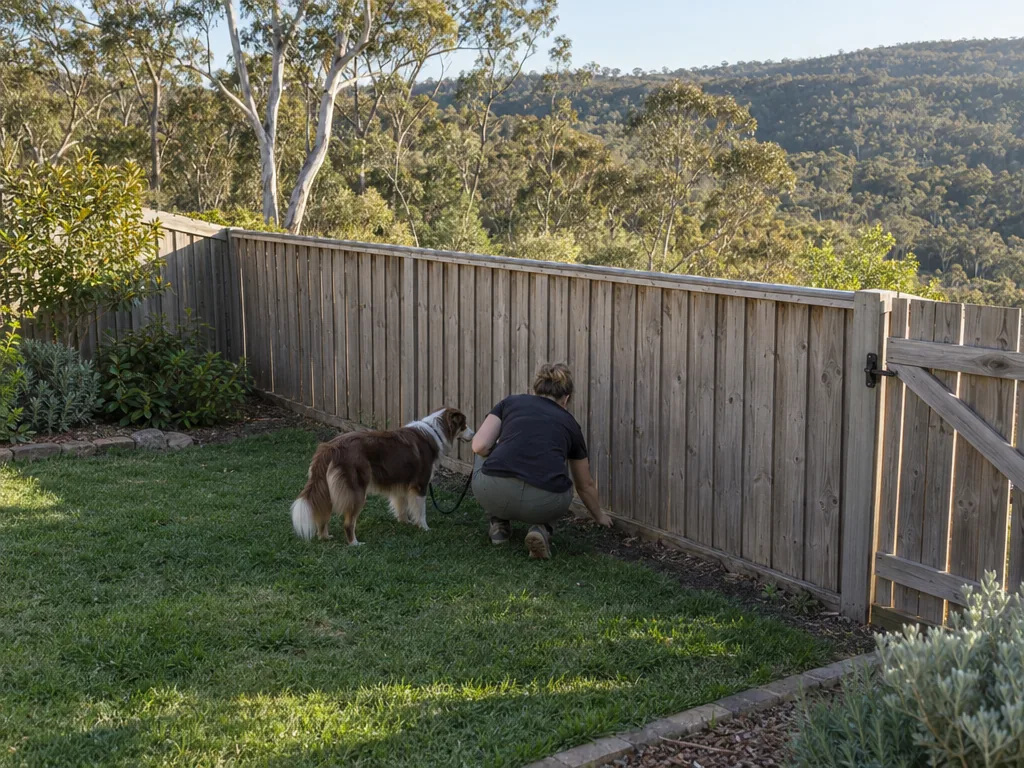
Trouble often starts before the boxes do. The RSPCA warns that in the weeks before a move, unfamiliar people such as prospective buyers or tenants may leave doors or gates open, and packing can leave unsafe items within your pet's reach. Inspection days are worth treating like moving day in miniature.
Look at the new place through your pet's eyes. The RSPCA suggests you check the new home's fencing and any busy road nearby before you move. If your cat has outdoor access, it says the move may be a chance to switch to indoor-only, and it encourages keeping cats contained to the property, especially after a move, because the area is unfamiliar.
Three small jobs pay off later:
- Take a recent photo showing your pet's markings. It helps identify a pet that goes missing.
- Order a new collar tag with your new details, ready for the day you arrive.
- Practise your plan so containment and travel become familiar, as NSW SES puts it for emergencies. A cat that has sat in its carrier a few times before the move is easier to load on the day.
If your pet is coming from somewhere without paralysis ticks, book the vet now. The tick section below explains why.
Where should your pet be while the doors are open?
Moving-day escape routes
- 1Unfamiliar people may leave doors or gates open RSPCA blog
- 2Doors and windows shut, other escape routes blocked RSPCA
- 3Pet secured in one room with food and water, or in its crate if crate-trained, never unattended RSPCA blog
- 4One named person watches gates and doors (your plan)
Source: RSPCA Australia, moving house with your pet; RSPCA, helping your cat adjust to a new home
This is the decision to make first, not last. RSPCA Australia, in a blog post dated 1 June 2022, says many people leave pets with a trusted friend or in boarding on moving day, and calls that sensible.
If your pet stays home, the same post says to keep it secured in one room with food and water, or in its crate if it is crate-trained, and never to leave it unattended. Do it early. NSW SES advises containing animals early because animals can sense stress and may hide or run away. The NSW Government adds that a light cloth over a crate may reduce anxiety.
Our advice at Palm Beach Removals is to turn that room into a plan the whole household knows:
- Pick a room the carry does not pass through, and clear it before the truck arrives.
- Put a sign on the door asking everyone to keep it shut.
- Name one person whose only job is watching gates and doors.
- When the removalists arrive, show them the room and the sign before anything is lifted.
On a peninsula block with a long or steep carry, doors and gates can stay open for a good part of the day. Our guide to grading a hillside carry helps you picture how long that might be.
How do you carry each kind of pet?
| Pet | How to carry it | Source |
|---|---|---|
| Cats and small dogs | A suitable carrier | RSPCA blog |
| Small animals | Cardboard or plastic box with air holes and a secure lid | NSW SES |
| Reptiles | Securely fastened sack or pillowcase | NSW SES |
| Small fish | 20-litre bucket with a lid and a hole for an air pump | NSW SES |
Cages and carriers should carry ID labels (NSW SES); a light cloth over a crate may reduce anxiety (NSW Get Ready).
Source: RSPCA Australia, moving house with your pet; NSW SES, plan for your household pets; NSW Government, get ready: animals
The RSPCA recommends a suitable carrier for cats and small dogs. For smaller animals, NSW SES lists practical options: a cardboard or plastic box with air holes and a secure lid for small animals, a securely fastened sack or pillowcase for reptiles, and a 20-litre bucket with a lid and a hole for an air pump for small fish. It also says cages and carriers should carry ID labels.
Plan the car trip so nobody has to wait in the car with the pet. The NSW Government is blunt: never leave pets alone in a car, even with windows open or in the shade. If your move falls on a hot day, our heatwave moving guide covers keeping pets cool.
What goes in your pet's moving-day box?
Source: NSW SES, plan for your household pets; RSPCA Australia, moving house with your pet; NSW Government, get ready: animals
Pack one box for the pet and keep it in the car, not the truck. A good model is the emergency kit NSW SES describes: 3 to 7 days of pet supplies, with ID, medications, vaccination records and a photo of you and your pet.
Add the things the first room will need. The RSPCA lists bed, familiar blanket, toys, litter tray, food and water for a cat's settling-in room. Throw in a lead, poo bags or spare litter, and in hot weather at least two water bowls.
The box does not have to be unpacked and forgotten. Keep it as your pet's emergency kit, and replace the stored water every six months. It suits a summer storm too, which our wet-weather moving plan covers.
The first days in the new house
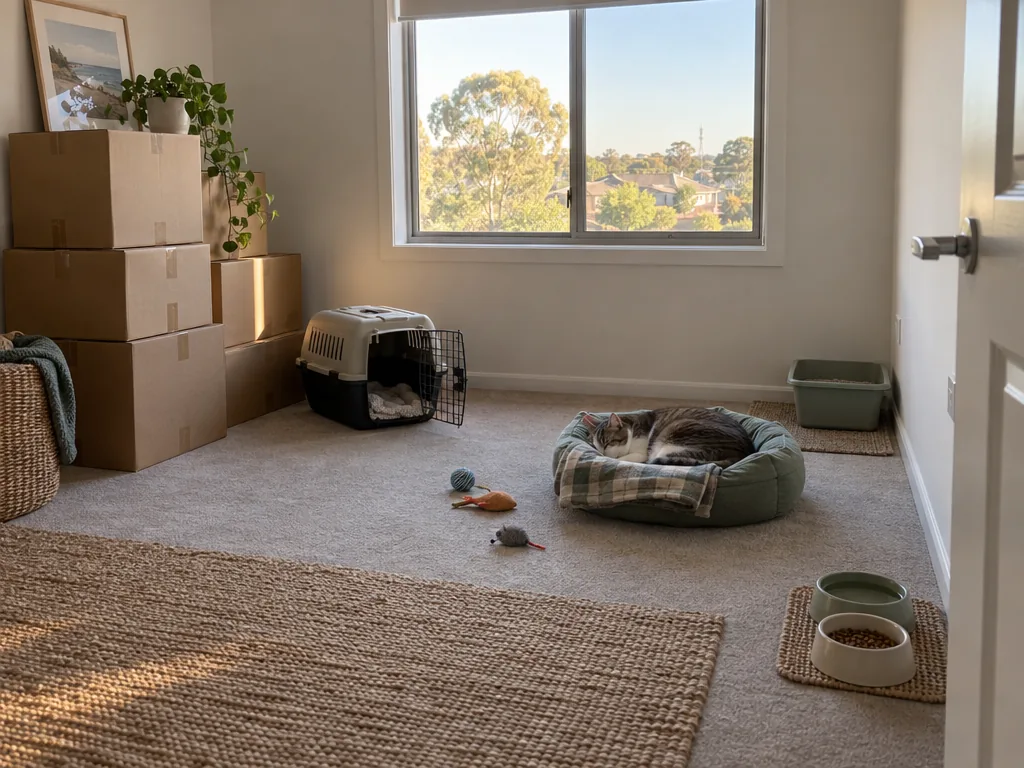
Wait for quiet. The RSPCA says to try not to release your pet in the new house until it is as quiet as possible, for example after the removalists have gone.
Cats and dogs settle differently:
- Cats. The RSPCA suggests confining a cat to one room for a couple of days with its bed, familiar blanket, toys, litter tray, food and water, then opening up more rooms over the next few days. Make sure all doors and windows are shut and other escape routes blocked.
- Dogs. Let them explore at their own pace, but supervise them. The RSPCA notes that a gate or fence you judged escape-proof may not be.
If your pet does get out, act at once. The NSW Government says to contact the local council and local vets and shelters straight away. That recent photo now earns its place.
Ticks: why a newly arrived pet needs a daily coat check
Tick activity on the Northern Beaches
- Jan
- Feb
- Mar
- Apr
- May
- Jun
- Jul
- Aug
- Sep
- Oct
- Nov
- Dec
- Active most of the year, especially after rain and in humid weather
- Generally most active
Source: Northern Beaches Council, ticks
Northern Beaches Council says ticks are common across the Northern Beaches, particularly in bushland, parks and gardens. They are active most of the year, especially after rain and in humid weather, and generally most active between October and January. A pet exploring a new, bushy garden in late spring is exactly the case to watch.
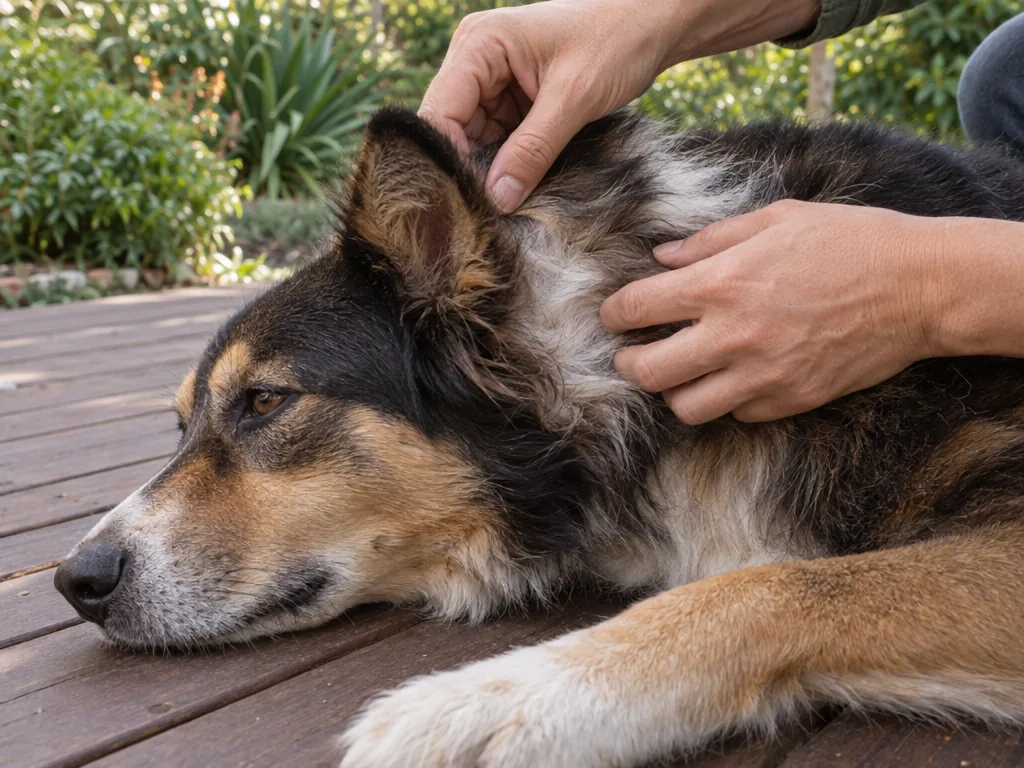
The paralysis tick lives on the eastern seaboard from North Queensland to Victoria. The RSPCA says to search your dog's or cat's whole coat at least once a day, even if you use tick products. Council also advises people to groom and check pets after time in garden or bushland.
Know the signs. The RSPCA lists wobbly back legs, a changed bark or meow, retching, drooling and laboured breathing. If you find a tick or a crater, or see symptoms, go to a vet immediately. Do not offer food or water, because the pet cannot protect its airway.
Two points for households on the move:
- If your pet is arriving from a non-tick area, the RSPCA says it can be vulnerable to tick fever from other ticks, because local animals generally develop immunity. Talk to a vet about tick control before you move in.
- Dog tick products are not safe for cats: the RSPCA says some dog products are highly toxic and can kill cats, so use only products made for the species and ask your vet which one.
Once the boxes are in, the garden can help. Council suggests you keep lawns mowed, remove weeds and dead vegetation, prune low vegetation, and use gravel mulch instead of wood chip or straw.
Where can your dog walk, and where can't it?
| Place | The rule | Detail |
|---|---|---|
| Northern Beaches beaches | Dogs generally not permitted | Exception: Mona Vale Beach (south) off-leash trial, 6am to 10am and 4pm to 7pm; fine can be $330 or more (checked November 2026) |
| Off-leash areas | 30 across the Northern Beaches | Council names among them Hitchcock Park, North Avalon, and Rowland Reserve, Bayview |
Source: Northern Beaches Council, news item dated 17 April 2026.
New arrivals often assume the beach is the obvious walk. On the Northern Beaches, Council says in an April 2026 update that dogs are generally not permitted on beaches. The exception is the Mona Vale Beach (south) off-leash trial, from 6am to 10am and 4pm to 7pm. The fine can be $330 or more (checked November 2026).
A quiet beach is still off limits: Council says not to be tempted to take your dog for a beach walk.
The good news is the choice of parks. Council counts 30 off-leash areas, including Hitchcock Park, North Avalon, and Rowland Reserve, Bayview. Because Mona Vale is a trial, check Council's page before you plan a beach morning around it.
Which records change, and which one the law requires?
| Record | Required by NSW law? | How to update |
|---|---|---|
| NSW Pet Registry | Yes, for cat and dog owners | Online with a NSW Pet Registry account (MyServiceNSW login) or at your local council; owners who cannot use the online service can send council the C3C Change of details form within 14 days of a change; add any temporary location OLG |
| Microchip register | Advised by RSPCA | Contact the register RSPCA |
| Vet clinic | Advised by RSPCA | Tell the clinic RSPCA |
| Collar ID tag | Advised by RSPCA | New tag with new details RSPCA |
Source: NSW Pet Registry, update your details (OLG); RSPCA, helping your cat adjust to a new home
Start with the one the law requires. Owners can update their contact details and the address where the pet is usually kept online with a NSW Pet Registry account, logged in with MyServiceNSW details, or by visiting their local council.
Updating only the microchip database is not enough: NSW law requires the NSW Pet Registry details to be updated too.
Some details trip people up:
- No online access? You can notify council with the C3C Change of details form within 14 days of a change.
- Pet living somewhere else for a while? If a pet lives at another location, even temporarily, you must update its location in the Registry to stay compliant. You can add extra locations and set the location for all your pets or just one. This matters if a dog stays with family for a stretch while you settle in.
- Then the other three. Update the microchip register, your vet clinic and the collar ID tag, as the RSPCA advises.
If you plan to use the paper form, note that Northern Beaches Council warned that from 5pm Friday 13 November to 30 November 2026 some services will be unavailable or at limited capacity, with delays expected after 30 November while backlogs clear. Allow for that inside your 14 days.
As a reminder of why the records matter, NSW SES notes that dogs and cats must be microchipped and registered in NSW.
Your pet's move at a glance
- Cat in one room: a couple of days, then more rooms over the next few days (RSPCA blog)
- Pet kit: 3 to 7 days of supplies (NSW SES)
- Ticks: generally most active October to January, active most of the year (Northern Beaches Council)
- Dogs on beaches: generally not permitted, except the Mona Vale Beach (south) off-leash trial; fine $330 or more (checked November 2026) (Northern Beaches Council)
- NSW Pet Registry: required by law for cat and dog owners; C3C paper form within 14 days of a change, for owners who cannot use the online service (OLG)
Five figures do most of the work: a couple of days in one room for a cat, a 3 to 7 day supply box, tick activity generally peaking October to January, a beach rule with one trial exception and a fine of $330 or more (checked November 2026), and a 14-day window for the paper Registry form. The card above keeps them together with their sources.
Planning your move with Palm Beach Removals
Your pet's room is part of the moving plan, so it belongs in the first conversation. When you request a quote from Palm Beach Removals, tell us about your pets and which room will stay shut on the day, along with the carry and parking at both houses. If parking is the open question, our guide to where the truck actually stops in Palm Beach is a good next read.
Sources
- https://www.olg.nsw.gov.au/pets/nsw-pet-registry/update-your-details-nsw-pet-registry
- https://www.rspca.org.au/latest-news/blog/moving-house-your-pet/
- https://kb.rspca.org.au/categories/companion-animals/cats/caring-for-my-cat/how-can-i-help-my-cat-adjust-to-a-new-home
- https://kb.rspca.org.au/categories/companion-animals/dogs/caring-for-my-dog/how-can-i-protect-my-dog-or-cat-from-tick-paralysis
- https://www.northernbeaches.nsw.gov.au/community/safety-and-wellbeing/ticks
- https://www.northernbeaches.nsw.gov.au/council/news/best-leash-areas-your-dog
- https://www.northernbeaches.nsw.gov.au/council/news/major-technology-upgrade-to-deliver-improved-online-services
- https://www.ses.nsw.gov.au/plan-and-prepare/animal-safety/plan-for-your-household-pets
- https://www.nsw.gov.au/emergency/get-ready/get-ready-animals